Five years ago, when Dr. Alison Simpson bought Springfield Family Dentistry in Springfield, KY, the practice was already using the Patterson MicroBVac evacuation system cleaner—and given how reliably it’s performed, it’s still the only vacuum lines cleaner her team uses.
“We have used others 1 or 2 times and they caused foaming in the lines, so we went back to MicroBVac,” she explained. “MicroBVac doesn’t foam. It’s an easy part of our maintenance routine.”
While Dr. Simpson’s team has relied on MicroBVac for years, Trinh Beno, CRDH, of Gulf Coast Advanced Dentistry in Fort Myers, FL, came to it fresh, trying it for the first time during this DPS review period. After a few weeks of daily use, she found the product lightened her team’s cleaning load. “We do not have to change the trap as often,” she said, adding that her team now spends less time on upkeep.
Calling MicroBVac “a great part of infection control,” Beno added, “It also prevented foul odors from saliva and old blood. This is important to both our patients and our practice.” Overall, she said, “We have enjoyed the product so far.”
Clean Lines, Strong Suction
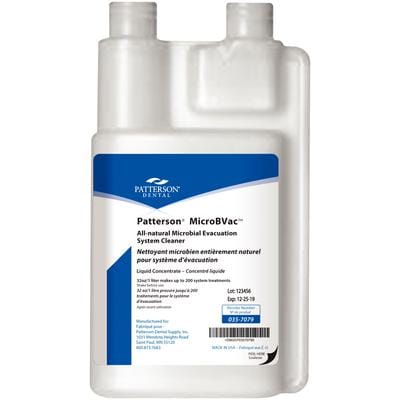
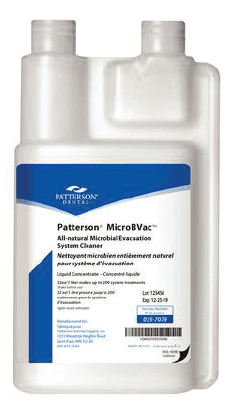
MicroBVac’s nonfoaming, pH-neutral microbial formula targets biofilm, organic solids, scum, and odors in evacuation lines for improved vacuum suction. The all-natural cleaner is environmentally friendly, noncorrosive, and safe on all plastic parts and pipes.
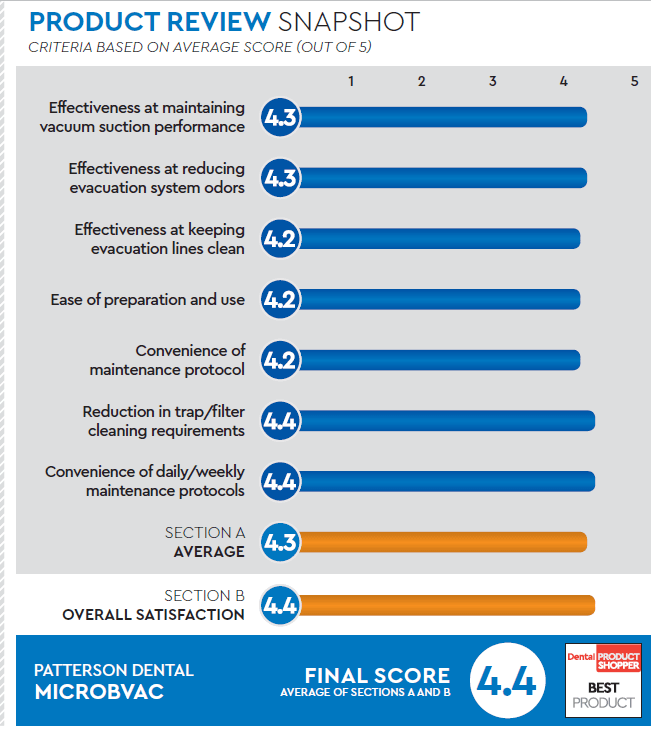
Every evaluator rated MicroBVac “very good” or “excellent” for its effectiveness at maintaining vacuum suction and reducing evacuation system odors.
Having previously struggled with “sluggish lines,” Courtney Anderson, EFDA, noticed that “the suction was stronger” with MicroBVac. “It cleaned our lines better than our current product,” she said.
Melanie Davis, RDH, BSDH, MEd, had dealt with “evacuation system problems in the past,” describing her office’s existing powder system cleaner as one of the most expensive on the market. She was pleased that MicroBVac “seemed to work just as well. The product was easy to use and seemed to effectively clean lines.”
Similarly, Dr. Ashish Arya wanted “a simple way to clean lines,” and found that “it worked as well as our existing product to keep the lines clean.”
Also in search of “a more straightforward way of keeping the lines clear and clean,” Dr. Shalom Mehler said MicroBVac “did what it was supposed to do!”
Dr. Jeffrey Greene noted the formula “had a neutral odor,” Dr. Simpson observed “less odor” coming from her evacuation system, and dental assistant Brittany Ellis said, “It helps dislodge the hard-to-reach areas, making it easier to clean and more time efficient.”
Ease of Preparation and Use
Practices can use MicroBVac on a twice-weekly or daily protocol. At closing, staff mix the cleaner with about 16 oz of warm water per operatory—0.5 oz (1 tbsp) for twice-weekly use or 5 mL (1 tsp) for daily use—then aspirate 8 oz of the solution through each high-volume evacuator (HVE) and saliva ejector valve, one at a time. The formula eliminates daily trap cleaning, so traps only need to be checked monthly.
MicroBVac is safe to use with traditional evacuation systems and direct-to-line suction cleaning, including HVE and saliva ejector maintenance. For integrated reservoir, tank, or sump-style systems, Patterson Evacuation Cleaner is the recommended choice.
Dr. Mehler called MicroBVac “a ‘behind-the-scenes’ product that simply does its job well,” pointing to “ease of use and the fact that it works well” as what he liked best. Dr. Simpson also said, “It’s easy to use and cost-effective.”
“It makes our job as assistants easier,” Ellis said, calling MicroBVac “easy to use, measure, and implement.” Dr. Greene found it “easy to measure ounces needed,” noting that the bottle “is labeled with ounces remaining on the side.” He suggested including a dispensing container with the product, making it easier for staff to follow the protocol and aspirate the solution into each valve.
Minimizing Maintenance
According to Patterson Dental, MicroBVac’s microbial formula continues cleaning between uses, and amalgam filters need fewer replacements. A single 32-oz bottle mixed per instructions makes up to 200 treatments.
“When using MicroBVac, we can minimize the daily maintenance if needed,” Beno shared. Dr. Greene said, “The traps seemed cleaner,” and Dr. Mehler had “less of a need to clean out the filter.”
An office manager also mentioned how the product allowed for “less work at the end of the day,” particularly appreciating “the twice-weekly maintenance.”
Overall Satisfaction
Everyone who participated in the product review noted they would recommend MicroBVac to others in the dental profession. When asked what they would like to see improved, more than half had no suggestions. Dr. Mehler summed up his experience, saying, “No problems means a good product!”
“I’m happy with this product,” added Dr. Simpson. Ellis, who was “very satisfied” with MicroBVac, said, “Our standard of care has improved, and it makes our workflow easier and safer.”