

With the Nobel Biocare esthetic digital workflow, a California periodontist turns treatment planning, surgery, and immediate temporization into a 60-minute process
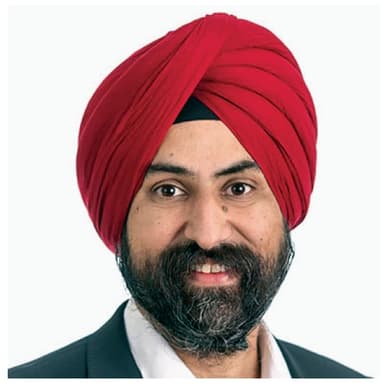
A board-certified diplomate of the American Academy of Periodontology and Implant Dentistry, Dr. Arora is a full-time clinician with a practice limited to periodontics and implant dentistry. In 2008, he finished his Certificate in Periodontics from the prestigious Eastman Dental Center at the University of Rochester Medical Center in Rochester, NY. He received his bachelor of dental surgery from K.L.E.S. Institute of Dental Services in India and a master’s degree in public health from Loma Linda University in Southern California. Apart from maintaining his clinical practice in Grass Valley and Roseville, CA, Dr. Arora lectures on various topics, including implant dentistry, treatment planning, bone grafting, and soft-tissue management techniques.
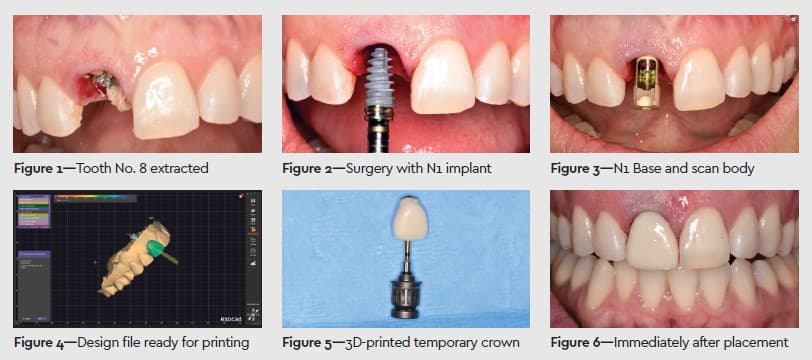
Periodontists face a key challenge in anterior implant cases: Balancing esthetic outcomes with their surgical expertise. While some of us do provide temporary crowns, the restorative process is traditionally laborious, time-consuming, and, frankly, something most surgeons don’t enjoy. With Nobel Biocare’s esthetic digital workflow, I can place an implant and deliver a custom, 3D-printed provisional that “fits like a glove” in under an hour.
It all begins with DTX Studio Clinic software, which we utilize for data collection and treatment planning. After planning the case, the X-Guide surgical navigation system allows us to achieve precise placement of the Nobel Biocare N1 implant. The system includes the N1 Base, a unique abutment that can be placed on the day of surgery.
Once placed, a digital scan of the base is captured using an attached scan body. From there, we simply send the scans to our lab, and within 5 minutes, we receive a design file that can be printed via our SprintRay Midas 3D printer. It takes us about 8 minutes to print the temporary crown, another few minutes to clean and cure it, and then it’s ready for placement.
The entire surgery and temporization process takes less than an hour from start to finish. In the past, the restorative component alone could take an hour and a half. SprintRay’s RayWare software will soon use AI to automatically design chairside temporary crowns, boosting efficiency even further.
A Patient Pleaser and Referral Builder
Integrating Nobel Biocare’s esthetic digital workflow has been a huge boost for our practice, and it gives us a significant competitive advantage. It also creates an excellent referral model—instead of sending patients back to their dentist with a healing abutment, our provisional perfectly establishes the emergence profile, simplifying the final restoration.
For doctors unfamiliar with the workflow, I’ve found that seeing is believing. Upon sharing cases, they immediately express interest in referring patients, who are excited when they learn they won’t have to wear a stayplate. It requires significantly less time and labor, the cost per unit is very inexpensive, and patients are extremely happy with the results. From a surgical perspective, it doesn’t get much better than that!