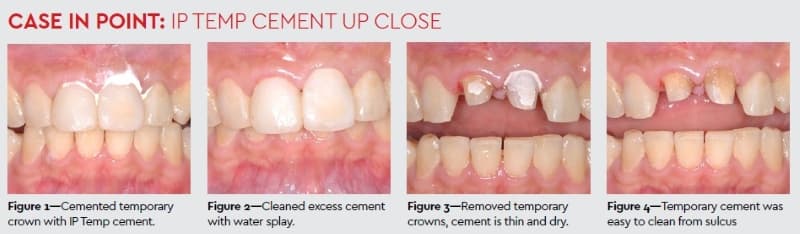



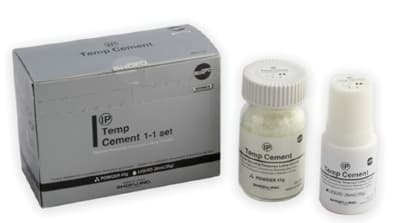
IP Temp Cement from Shofu provides a reliable option that makes cleanup simple during placement and after provisionals are removed, saving time and improving the patient experience
Why You Should Give it a Try
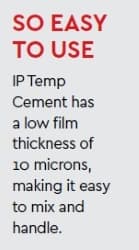
IP Temp Cement’s surface is made of a pre-reacted glass filler, which offers acid neutralization and anti-plaque benefits—more patient perks. The cement also has an ideal thickness and is very smooth, Dr. Yamamoto said, so it doesn’t push up to the temporary crown. It’s very stable, so he’s always confident patients will leave his office with a provisional they can count on.
“It fits very well. If the cement is sticky, sometimes it’s difficult to stay on the tooth,” he said. “But IP Temp is very smooth and has a very good viscosity.”
And, of course, it’s easy to clean.
“Excess cement literally sprays clean very quickly,” he said. “Once it sets, it's dry and hard, so after I remove the provisional from the abutment teeth with the instrument, it’s easy to clean the remaining cement balls inside the provisional and the abutment tooth. I strongly recommend other clinicians try this temporary cement.”
Bottom line: “It’s easy to clean, easy to use, easy to handle and after removal it’s very easy to clean the surface of the abutment or inside the temporary crown.” well. The temporary doesn’t come out, so the patient doesn’t have to come back to re-cement a temporary crown.”
A Reliable Option
IP Temp Cement’s surface is made of a pre-reacted glass filler, which offers acid neutralization and anti-plaque benefits—more patient perks. The cement also has a an ideal thickness and is very smooth, Dr. Yamamoto said, so it doesn’t push up to the temporary crown. It’s very stable, so he’s always confident patients will leave his office with a provisional they can count on.
“It fits very well. If the cement is sticky, sometimes it’s difficult to stay on the tooth,” he said. “But IP Temp is very smooth and has a very good viscosity.”
And, of course, it’s easy to clean. “Excess cement literally sprays clean very quickly,” he said. “Once it sets, it's dry and hard, so after I remove the provisional from the abutment teeth with the instrument, it’s easy to clean the remaining cement balls inside the provisional and the abutment tooth. I strongly recommend other clinicians try this temporary cement.”