


Aspen Dental is using Curodont Repair Fluoride Plus and AI-assisted diagnostics to close the treatment gap between traditional prevention and invasive restoration—and change the way patients think about going to the dentist
A Slow Start—Then Growing Confidence
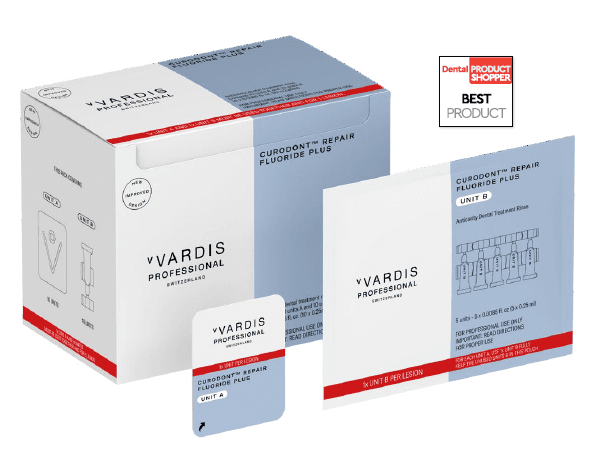
At first, some clinicians within the Aspen Dental network questioned whether the product could truly stop the progression of early lesions and enable the restoration of lost minerals into the depth of the lesions, or whether it would ultimately prove little different from traditional preventive therapies. “Let’s be honest,” Dr. Ramalho said. “Some dentists were skeptical. ‘Does this really do what it says it does or is it just another product where we can only treat the surface of the enamel?'”
To support implementation, Aspen Dental and vVARDIS developed an extensive education strategy focused on three groups: dentists, hygienists, and patient consultants. Doctors received training on the science and clinical evidence behind the technology; hygienists learned how to integrate treatment into daily workflows; and front-office teams were taught how to communicate its benefits to patients.
Beyond the scientific evidence and cases from peers, the turning point came when clinicians began seeing results firsthand.
“When the patients come back a few months later and you do another x-ray, you see the lack of progression and even reduction in the size of the lesion,” Dr. Ramalho said. “That really made an impression with our clinicians. You see a slow start and then it’s like, ‘No, this really works. This is amazing.’”
When AI Entered the Picture
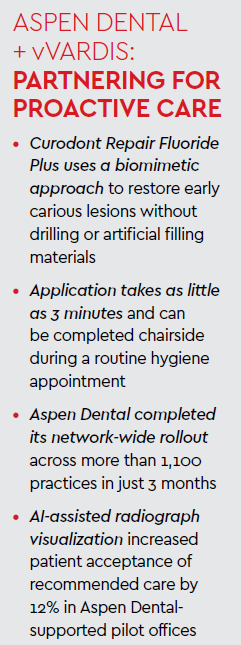
Aspen Dental's integration of Videa's AI technology has become a significant driver of treatment acceptance. While the software helps identify early lesions, its greatest impact may be in making those lesions visible to patients.
“The bad guy is not the dentist telling you, ‘Oh, you have cavities,’” Dr. Abivardi said. “The patient says, ‘I don’t feel anything—are you really telling the truth?’ But when you have the AI, the bad guy is AI. Even a child can see, ‘What are these red dots?’”
Practices using AI alongside Curodont, she noted, have experienced dramatically higher treatment acceptance.
Dr. Ramalho said hygienists within the Aspen Dental network frequently point to AI as one of the most effective tools for helping patients understand why intervention makes sense before symptoms appear.
Expanding What's Possible in Hygiene
Another factor driving adoption is how easily the treatment fits into existing workflows. The application can be completed in just a few minutes, often during a routine hygiene appointment, allowing patients to receive care the same day the lesion is identified. The simplicity of the procedure has also expanded the role hygienists can play in managing early disease while freeing dentists to focus on more complex procedures, Dr. Ramalho noted.
Moving Toward a New Standard
One year into the partnership, both organizations see a broader shift occurring across the profession.
DSOs, academic institutions, and clinicians are increasingly embracing non-invasive approaches to caries management. For Dr. Ramalho, one of the strongest indicators of that shift is what happens when dentists begin tracking the lesions they’ve historically placed on a watch list or drilled prematurely.
“I think dentists mostly don’t notice exactly how many early-stage caries they see in a day,” she said. “They don’t count it. Then they say, ‘Oh my God, these are all the opportunities I’ve had. Look at what I could have treated with Curodont. Look how many patients I could have helped.’ When they start looking at the data, they really get bought in.”
For Dr. Abivardi, the ultimate measure of success is seeing patients become proactive participants in their own care—coming into the practice before disease progresses and asking whether something can be done now rather than later.
“There really has been a change of mindset with the patients. Before, many were afraid to come in because of the drill and would only come when they were in pain. Now, they want to come in and see if they can still be treated drill-free and needle free. And that is a dream for dentists who really want to improve the oral health of their patients.”