



Dr. Sully Sullivan shares how the MetiSmile takes visualization and treatment planning to the next level, and why he’s excited about the Shining 3D’s newest evolution in 3D printing

Dr. Sullivan graduated from the University of Tennessee—Knoxville and earned his dental degree from the University of Tennessee College of Dentistry in 2015. He now practices in Nashville, TN, where he leads a state-of-the-art office with 6 doctors. After joining his father’s solo practice in 2015, he transformed the family-owned office into a multimillion-dollar dental business. He hosts 2 podcasts—The Millennial Dentist and 3D Dentists Mastermind—which focus on practice growth and provide a real-world perspective on owning, running, and practicing in a dental office. Dr. Sullivan is also a partner in 3D Dentists, an education company that helps dentists reclaim and grow their practices while offering live patient clinical training with an emphasis on dental implants. Sullivan Dental Partners additionally serves as home to the 3D Dentists Nashville Training Center.
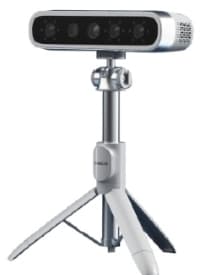
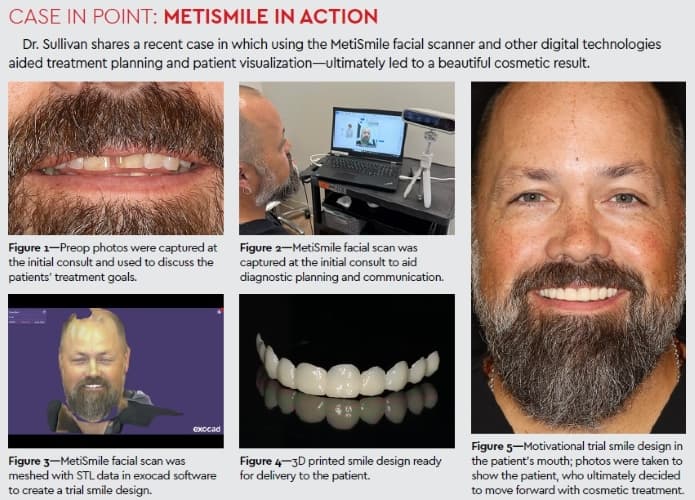
This integration means I’m no longer guessing about tooth position in relation to lips, smile line, or facial symmetry, and I have a better idea of bone reduction in implant restorative cases. I can design restorations in the exact context of where they should live in the patient’s face.
The ability to rotate the image and view the patient’s digital waxup from a profile position is key in creating natural curvature. Whether it’s determining incisal edge position, midline alignment, or vertical dimension, the planning is precise, the outcome is predictable, and the patient communication is crystal clear.
Even the best DSLR images can distort proportions and leave room for error. That data will mesh with the centrals, but the further back in the arch you go, the more the distortion that will occur. A 3D scan eliminates that risk, giving me true-to-life dimensions I can trust. It also allows for real-time simulations where patients can literally watch their new smile take shape on their own 3D face—not a generic template. That visual connection? It’s incredibly powerful.
Patient Trust—Elevated
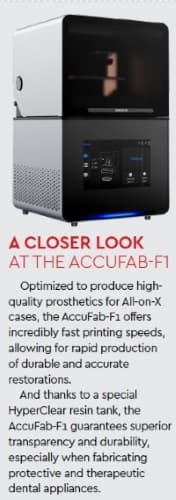
Technology integration has repeatedly proved integral to implementation. That is why I’m so excited for Shining 3D’s new AccuFab-F1 printer, which will open the door for improved ways of printing with more ceramic filled resins. This breakthrough continues to position 3D printing of final restorations as a foreseeable reality.
The result of all of this innovation is that patients will fully understand the plan, trust the process, and become eager to move forward with treatment.
_RGB.png&w=384&q=80)