



Two dentists describe how Patterson Temporary Crown and Bridge Material simplifies their workflow and leads to comfortable, functional, and esthetic provisionals
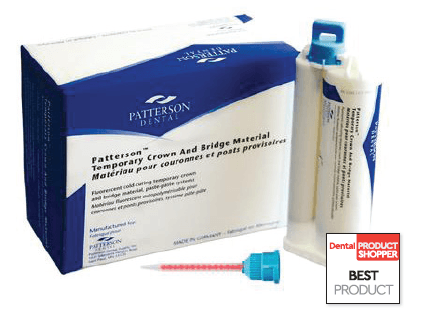
A temporary crown may not be the final restoration, but that doesn't mean it should look or feel temporary, especially because patients rely on those provisionals for weeks or even months.
According to 2 DPS evaluators, Dr. Gary Dong and Dr. Carl Sakamaki, Patterson Temporary Crown and Bridge Material streamlines and simplifies the provisional-making process—letting patients leave the chair with well-fitting, comfortable, functional, and esthetic provisionals that stay in place until the permanent restoration is ready.
Easy to Place with Excellent Esthetics
Dr. Dong noted sufficient working time to manipulate and adapt the material. "The relatively quick setting time allowed for efficient completion of the procedure," he added.
"It was easy to dispense and place with a quick setting time and minimal trimming and adjustments," said Dr. Sakamaki after creating several posterior crowns and an anterior bridge in his Denver practice. "It set nicely and hardened quickly...and cleanup was also simple."
Available in 6 shades—A1, A2, A3, A3.5, B1, and BL—Patterson Temporary Crown and Bridge Material produces lifelike provisionals.
After fabricating several full-coverage temporaries and a 3-unit bridge in his Chicago practice, Dr. Dong said, "The material produced a smooth surface with good overall esthetics and a natural appearance."
"Esthetically, Patterson Temporary Crown and Bridge Material offers a very good shade match and is shade stable," Dr. Sakamaki explained.
In fact, when he placed a provisional bridge in the anterior, his patient thought it was the final restoration.
Well-Fitting Provisionals That Last
Dr. Dong saw minimal soft-tissue irritation, which he attributed to the material's good marginal adaptation and smooth, well-contoured margins.
"There were no fractures, retention was adequate, and patients were happy with both the comfort and esthetics," he added.
When Dr. Sakamaki removed the provisionals to seat the definitive restoration, he found, "There was no leakage, the prep was clean, and the tissues were very healthy, which made placing the final crowns a breeze."