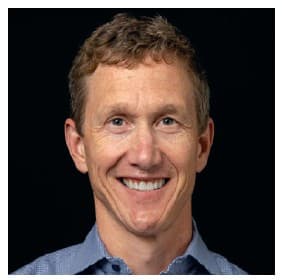
New technology doesn’t always come from a sales pitch—sometimes, it comes from the lab. That’s how Dr. Mark Kleive first heard about the Aoralscan intraoral scanner. “One of the labs I was using suggested I look into Shining 3D’s product line because their customers who were using the Aoralscan were seeing great results,” he said.
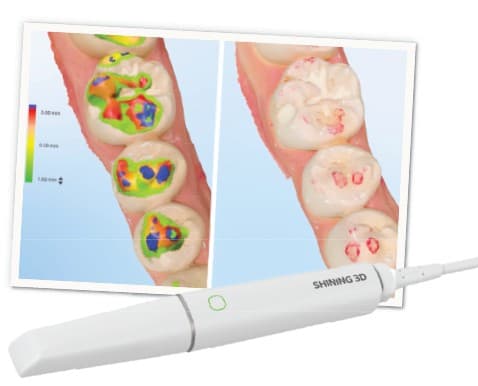
The price point ultimately sealed the deal, he added, noting that the Aoralscan and other Shining 3D products—such as the MetiSmile facial scanner, another staple in his digital workflow—offer a great value. Today, Dr. Kleive and his team use the new Aoralscan “ELF,” an acronym for ergonomic, lightweight, and functional.
Accuracy at Your Fingertips
“It’s absolutely the best scanner we have ever used, by far,” he said. “The quality of images that we are getting, the ease of use, how light it is—ergonomically, it feels like you’re holding a pencil compared to previous scanner versions.”
Aoralscan ELF excels even on hard-to-scan surfaces, such as gold restorations. “Whatever algorithm or AI technology Shining 3D uses to capture these details is so accurate,” Dr. Kleive said. “It glides over every surface, acknowledging what’s tooth and disregarding what’s tissue…it’s amazing. There would be a revolt if I took this scanner out of the office.”
AI-Powered Software
In Dr. Kleive’s experience, the scanner software also shines. “The number of modules and how robust they are is a real value-add, and they’re efficient,” he explained. “You can scan a patient and send it directly to a 3D printer without any additional software or data manipulation.”
Dr. Kleive often uses IntelliBite, a digital occlusion optimization technology that improves bite registration accuracy by refining occlusal contacts based on real intraoral conditions. There’s also 3D plaque visualization, which calculates the proportion of plaque coverage on tooth surfaces and turns it into an easy-to-read report that can be easily shared with patients through a QR code.
“The oral health report is also a nice feature,” he said. “I tell my team all the time, our job is to share our care, skill, and judgment, and technology pieces like this help people see us differently in dentistry. So often patients say, ‘No one’s ever showed me this before or used this technology before.’ It’s a way of separating yourself out in our profession.”
Healthier, Happier Patients
Ultimately, Dr. Kleive said, the best dentistry will always be the least amount of dentistry.
“In my world, it’s not about glitz—it’s about being able to share data with patients in a way that helps them understand it better. And if they leave with the information and images on their phone, it helps them learn more about their situation and ultimately choose to be healthier.”


_RGB.png&w=384&q=80)