



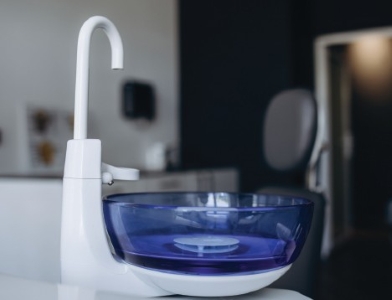
 This year, Dental Infection Control Awareness Month, celebrated in September, focuses on “Embracing a Culture of Safety: Empowering Patients and the Dental Team.” And what better way to empower your team—and protect your patients—than answer some frequently asked questions about dental unit waterline safety.
Dental unit waterline safety is one of the basic expectations of safe dental care outlined by the Centers for Disease Control and Prevention (CDC). However, 80% of dental practices don’t perform regular waterline testing to ensure their waterlines contain less than the CDC-recommended limit of 500 cfu/mL of bacteria. Heavily contaminated dental waterlines have been implicated in outbreaks of nontuberculous mycobacterial disease.
Michelle Strange, RDH; Alexandra Rodriguez Serrano, director of product marketing for Sterisil; and Brooks Cornell, senior category manager for infection prevention at Patterson Dental, all provided their insights into this critical element of patient and team safety.
 WHICH DENTAL UNIT WATERLINES DO I NEED TO TEST?
All of them—your high-speed handpieces, air/water syringes, and ultrasonic scalers—even if you’re not currently using them.
“Daily maintenance is just one piece of a bigger puzzle,” said Serrano. “How do we know if that maintenance is effective and if it’s working, if you’re not testing your waterlines to identify if you have a biofilm problem?”
WHAT AM I TESTING MY WATERLINES FOR?
In short, high levels (>500 cfu/mL) of bacteria. Just like bacteria in the mouth, bacteria in water form biofilms, and the interior surfaces of long, narrow dental unit waterlines provide the perfect protected space for biofilm formation. Once established, biofilm becomes a bacterial breeding ground—just like plaque.
“In 2019, I was just doing the bare minimum with my waterlines, because I didn’t know any better,” Strange admitted. “And once I found out that we needed to test and shock and have all these protocols, I found that I was failing all of mine.”
HOW CAN I ELIMINATE BIOFILM IN MY WATERLINES?
Without replacing the tubing, biofilm can’t be totally eliminated from dental unit waterlines. Dental practices should follow best practices for minimizing biofilm buildup and improving the quality of the water delivered to patients. These actions include flushing waterlines between patients and at the end of the day, emptying and drying lines overnight, and using filters, chemical treatments, and anti-retraction valves.
WHO SETS THE RULES FOR DENTAL UNIT WATERLINE SAFETY?
No federal regulations exist, but some states have legislation or are developing it. Ultimately, it’s your responsibility to know your state board’s current requirements. The CDC has recommended that dental unit waterlines contain no more than 500 cfu/mL of bacteria, and the American Dental Association (ADA) has a recommended dental unit waterline infection control protocol, which includes developing practice policies and procedures based on the best evidence. For example, don’t rely on your peers or other secondhand sources. Instead, turn to the CDC, state and local guidance, and dental unit manufacturer instructions.
HOW OFTEN SHOULD I TEST MY WATERLINES?
First, check with your equipment manufacturer for unit-specific recommendations or instructions for use. The Association for Dental Safety and ADA recommend testing regularly, but don’t specify intervals. The Solmetex SAFEWater Solution Protocol provides concrete interval recommendations (monthly, quarterly, and annually) as well as guidance on what kind of testing and treatment should be performed each time.
“Our SAFEWater Solution Protocol is one really big part of the puzzle,” said Serrano. “It was curated very intentionally with the practice in mind to make it as easy and implementable as possible.”
WHAT’S THE PROTOCOL FOR DENTAL UNIT WATERLINE MAINTENANCE, AND WHO SHOULD BE IN CHARGE OF IT?
As Serrano explained, different standard operating procedures (SOPs) are needed for different systems.
“Oftentimes, practices have some diversity in their chairs. There could be a municipal feed chair and a chair that has a bottle feed,” said Serrano. “The protocols for those have to be very different, because you can’t place a straw into a municipal feed chair. So we have SOPs that allow practices to standardize those procedures and their protocols for their practice.”
Strange described her experience with Sterisil products in creating SOPs. “I like that everything is compatible,” she said. “So shocking the lines and testing the lines and then using that daily maintenance, it’s very easy, and since I’m writing the SOPs for my practice, it just makes sense to have things that are going to all work together. I don’t have to have extra steps or confuse anybody if I’m not the one doing it that day.”
The ADA recommends having a dedicated infection control coordinator. However, as Serrano pointed out, turnover happens, so having a written SOP is critical.
“How do you onboard someone if the person who was responsible for maintenance is no longer in the practice?” she asked. “Having protocols and SOPs in place mean that when turnover does happen, or someone is out on leave, your practice is still safe and compliant.”
HOW LONG SHOULD A DENTAL UNIT WATERLINE TEST TAKE?
Different types of tests have different turnaround times. Quantitative in-house tests, or paddle tests, can take up to three days to give results that require subjective interpretation. Results from mail-in tests may take a week. These types of tests are useful for giving specific information on bacterial counts, but leave the unit’s waterline untreated in the meantime.
The Solmetex Sterisil FASTCheck 15 test is a simple strip that provides practices with a pass/fail result showing whether the bacterial count is under or over 500 cfu/mL. In about 15 minutes the practice knows whether it needs to perform a shock treatment that day.
“It’s very easy to interpret the FASTCheck 15 results,” noted Serrano. “It’s one or two lines. One line is negative for bacteria, two lines is positive for bacteria. You’re able to remediate almost immediately and make sure the operatories that are being used with patients for the day are and remain safe. You have that result in hand, quite literally, almost immediately.”
And if you fail the test? “If you’re lucky, you can treat it on the first shock,” said Cornell, noting that the fast turnaround time can help practices get the affected operatory back up and running sooner.
I USE MUNICIPAL WATER. ISN’T IT CLEAN?
While the bacterial count in the water from your municipal feed should be safe enough to drink, the problem isn’t in the water. It’s in the line, where the biofilm has formed. And since dental procedures routinely create aerosols, patients aren’t the only ones at risk for infection from heavily contaminated waterlines.
Strange shared an anecdote: “I challenge practices to test their toilet water and test their dental unit waterlines and see which ones pass. And the toilet always passes and the waterlines fail.”
I USE STRAWS OR DAILY MAINTENANCE TABLETS IN MY BOTTLE SYSTEM. ISN’T THAT ENOUGH?
Strange reiterated that the problem lies not in the bottle, but the line. “We have to ensure that we are doing the right things in our waterlines, so we need to test,” she said. “That’s the only way we will ever know if what we do day in and day out is actually working. And we need to test prior to shocking the line, because we want to make sure we test that the daily maintenance is working, not the product that’s shocked the lines clean.”
“Daily maintenance tablets, or potentially even straws that are used to maintain dental unit waterlines, are just one aspect of an established protocol,” Serrano agreed. “The testing component is incredibly important.”
I USE A PURIFICATION SYSTEM. DO I STILL NEED TO TEST MY WATERLINE?
In a word, yes. “Practices think they don’t need a test because they’re using some other kind of treatment,” noted Cornell. “No, you actually need to make sure the treatment’s working.”
What should I do if my dental unit waterline fails testing?
If you get a positive result on a FASTCheck 15 test, your waterline needs shock treatment with an antimicrobial product like Citrasil Shock. After treating the line, use another FASTCheck 15 test to see if the bacterial levels have been reduced to below 500 cfu/mL. If not, it may be time to call Solmetex for professional help.
Whichever test you use, if you get a positive result, use the same type of test after shocking the waterline to keep the results consistent. However, the faster you can get results, the faster you can get your operatory back up and running. “Anything that can prevent the office from shutting down will help improve efficiency,” said Cornell.
WHAT ARE THE ADVANTAGES OF STERISIL DENTAL UNIT WATERLINE PRODUCTS?
“The way the products work synergistically is what I’m most passionate about,” said Serrano. “Our silver ion technology and the formula for our straw and Citrasil Shock are all intentionally designed to be efficient and compatible for use with one another. To have an easy in-office test that can give you a result within 15 minutes is incredible. But then, if you fail, and you have a straw in place, to be able to remediate with your straw in place, and not have to take one extra step to remove the straw or think about the compatibility of products is incredibly important. When products are compatible, they’re even that much more effective and efficient.”
Strange concurred. “Especially if this process is new for your team, it’s important to simplify it as much as possible, or it will get confusing,” she said. “So how can you do that? Having products you know are compatible and that don’t require a lot of steps will make it easier.”
Where can I get help with waterline testing and treatment?
In addition to its online resources, Solmetex offers one-on-one support to practices having difficulty fully remediating their dental unit waterlines or setting up the right waterline maintenance protocol.
BEGIN TODAY
“I know none of us got into this wanting to harm our patients or make them sick,” said Strange. “So if you’re doing nothing at all, you have really got to test your waterlines immediately. Do not wait another day.”
REFERENCES
American Dental Association. Dental unit waterline infection control. ada.org/-/media/project/ada-organization/ada/ada-org/files/resources/ada-library/duwl_one_page_guide_infection_control.pdf
Centers for Disease Control and Prevention. Outbreaks of nontuberculosis Mycobacteria infections highlight importance of maintaining and monitoring dental waterlines. October 31, 2022. archive.cdc.gov/#/details?url=https://www.cdc.gov/han/2022/han00478.html
Solmotex. Understanding biofilm growth, bacteria, and CFU counts in dental unit waterlines. April 22, 2025.solmetex.com/2025/04/understanding-biofilm-bacteria-in-dental-unit-waterlines-2/