Once I stopped thinking like a technician and started thinking about how a patient will age with that implant, my entire approach changed.
Working in vastly different environments pushed my growth the most. I went from treating Medicaid kids to celebrities in New York City to complex surgical patients. That contrast showed me how personal implant dentistry really is—there’s no single template for everyone. My biomimetic training also shaped me early on. Learning to conserve biology and respect tissue through Pascal Magne’s philosophies grounded me in the belief that less trauma leads to better healing.
As my implant practice evolved, so did the field. Regenerative biologics and minimally invasive techniques have significantly improved the healing experience, soft-tissue outcomes, and overall patient comfort. Digital planning and facial-scanning technology have advanced tremendously in the last five years, allowing far more precise and reproducible facially driven implant designs than were previously possible. When digital workflows meet regenerative principles, outcomes improve dramatically.
Looking ahead, implant dentistry is moving toward a philosophy centered around oral-systemic health and longevity—integrating biology, function, facial structure, and whole-body health—with more clinicians using salivary diagnostics, CBCT-based facial analysis, and personalized wellness protocols.
What excites me most is that implants blend surgery, esthetics, regenerative medicine, and creativity in one treatment. And with no two cases the same, there is always a new problem to solve—keeping the work engaging and constantly pushing me to grow.
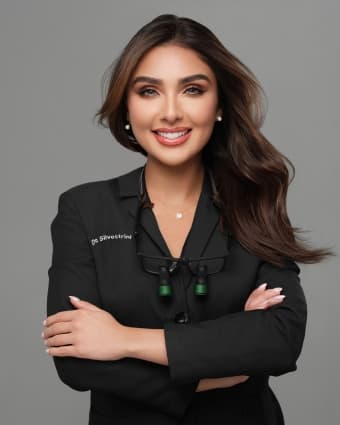
Melanie Silvestrini, DMD, FICOI
Miami, FL