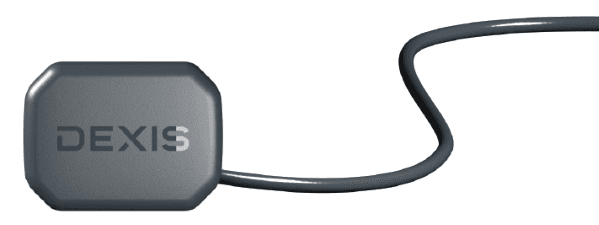



A West Coast clinician who jumped on the digital bandwagon early shares how the latest DTX Studio Clinic v4.7 cuts through the chaos, and when paired with the OP 3D LX and Ti2 sensor, streamlines treatment planning, diagnosis, and patient communication
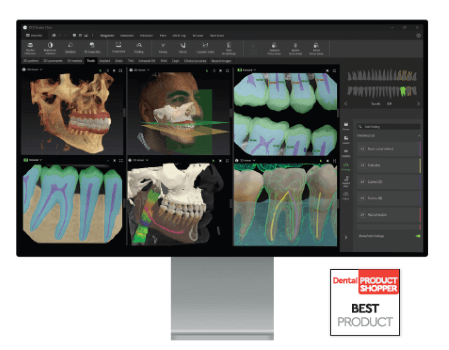
One-click workflows paired with tools like MagicAssist, which organizes raw data instantly, mean that treatment planning that once took several minutes and multiple clicks can now be completed in seconds. This further expands DTX Studio Clinic's capabilities for comprehensive diagnosis and treatment planning, especially for complex procedures like implant placement.
“I was more than just surprised—I was shocked at how accurate the implant planning is,” Dr. Gillespie said, “and it’s just one button. You hit ‘go’ and it plans it all for you.”
Less Talk, More Action
Dr. Gillespie believes one factor that increases patients' understanding is the unique, color-coded way that DTX Studio Clinic displays its findings.
"You can have all the information, all the different images, and as a doctor, you can take the time to look at it. But it's really about the doctor-patient interaction," he shared, "making sure patients feel confident that I understand what I'm looking at and can communicate it clearly to them so they understand, too. This software does that."
Dr. Gillespie also has found that there’s less need for talking because the colored images and symbols are so easy for patients to understand.
"Patients are more empowered to make their own decisions regarding their health and treatment," he added. "They're no longer relying on blind faith or just taking the doctor’s word for it, and I think the byproduct of that is more treatment being done because the patient fully understands what's needed.”
3D That Does It All
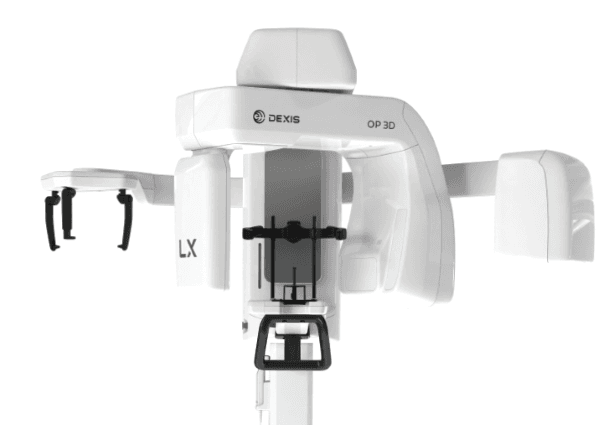
Dr. Gillespie pairs DTX Studio Clinic with the ORTHOPANTOMOGRAPH OP 3D LX, a multimodality imaging platform with 2D and 3D functions. It offers high-resolution scans, 96 customizable fi eld-of-view (FOV)options, and 4 resolutions, including endo and low-dose modes.
“One of the AI functions is that it orients the image perfectly,” Dr. Gillespie said. “It can make those changes for me so I can read the images clearly every single time.”
Along with an optional 15×20-cm FOV—a helpful feature for orthodontics, oral surgery, sinus procedures, or TMJ surgery—the OP 3D LX offers an optional cephalometric modality, as well as panoramic and extraoral bitewing imaging.