Many of the families I see at my clinic don’t have the budget for extensive dental treatment such as crowns. In fact, even the possibility of financing a future root canal is well out of reach for many of them. We also tend to see a particularly high volume of patients who have extensive tooth decay, and it seems to be especially prevalent with my patients who are young children.
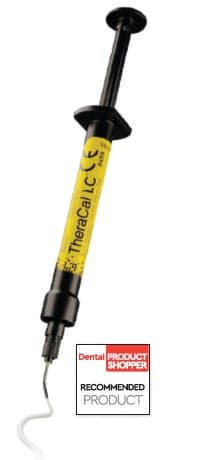
It’s for these reasons that I routinely rely on TheraCal LC. Using this material has helped me restore some of the deepest lesions in many of my patients. And after treating them with TheraCal LC, I am confident they will not be in pain when they leave my clinic.
An Ideal Direct Pulp Cap
There are so many materials available to us as clinicians, but the reason I turn to TheraCal LC is because I love its ability to be used as a direct pulp capping agent.
Why? Because that puts more distance between the time a cavity is filled and a future root canal, which is so important, especially for my younger patients and families who have limited budgets for dental care.
The alkaline nature of TheraCal LC promotes pulp vitality,1,2 which is particularly helpful when I place it over affected dentin in deep lesions.
‘Buys Us Time' Before Root Canals
We receive referrals for root canals from all over the state for patients who are sometimes younger than 10 years old. If the tooth is still vital, I will remove the decay just short of reaching the pulp chamber and line the base with TheraCal LC before restoring.
I have found this to be very helpful for these patients because it buys us time before having to think about a root canal. And when that time arrives, the apices will have closed, which makes root canal treatment more predictable.
A perfect illustration of this concerns an 8-year-old patient who was sent to my clinic for a possible root canal treatment of tooth No. 19. I found the tooth to be vital and, while not painful, the decay was extensive and approaching the pulp chamber. I layered TheraCal LC and then restored with a glass ionomer. Since then, the patient has been symptom-free and the tooth has remained vital.
TheraCal LC is easy to handle, and it light-cures and bonds well. As far as long-term treatment results, I have found fewer cases of pulpitis in deeper restorations when TheraCal LC was applied than when it was not.
References
1. Okabe T, Sakamoto M, Takeuchi H, Matsushima K. Effects of pH on mineralization ability of human dental pulp cells. J Endod. 2006;32(3):198–201.
2. ADA definitions for direct and indirect pulp capping at http://www.ada.org/en/publications/cdt/glossary-of-dental-clinical-and-administrative-ter