




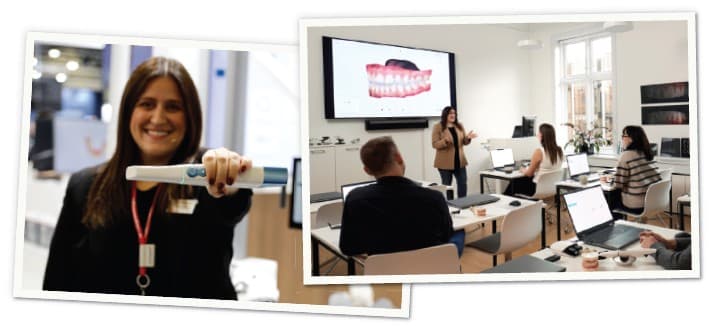
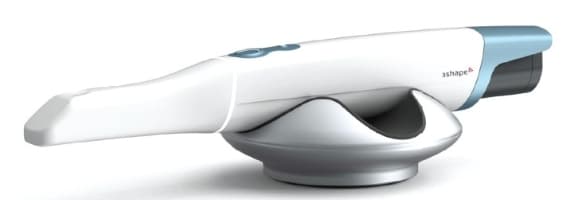
Dr. Ornella Delli Rocili has built her career at the intersection of clinical dentistry, education, and digital innovation—from founding her own practice in Venezuela to leading global training at 3Shape. Here, she sits down with DPS to explain how the company’s new TRIOS 6 intraoral scanner, Dx Plus software, and DentalHealth app are reshaping diagnostics and empowering clinicians to see more, do more, and engage patients like never before.
Q: How does Dx Plus software expand what clinicians can do with a single scan?
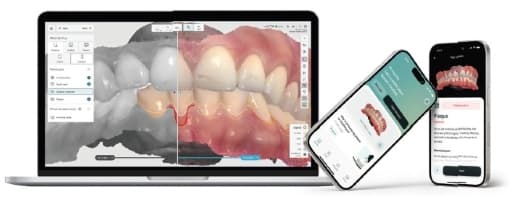
A: With the Dx Plus software, clinicians can evaluate surface caries, tooth wear, gingival recession, plaque, and proximal caries through hyperspectral technology. In practice, it is very insightful to combine a high-quality intraoral scan with software that can indicate different severity levels. It’s important to remember that Dx Plus is an assistive tool that complements the exam—it’s not a replacement for it. The results clearly highlight severity for certain conditions and help the staff by providing an objective second opinion at chairside.
An example I find extremely useful in clinical practice is gingival recession, where Dx Plus highlights recession in millimeters and groups it by extent—precursory, initial, moderate, or severe. For preventive care, I value that the trained AI model can surface millimeter-level changes as small as 0.25 mm.
Another great feature is the software’s ability to flag early tooth wear and exposed dentin, even on the first scan. Then, with a follow-up scan, measure and compare exactly how much wear a patient has. That is something worth exploring!
Q: What impact does Dx Plus have on the patient experience—both chairside and after patients leave the practice?
A: The most important part is what happens after the scan. Dx Plus and the DentalHealth app provide AI-driven diagnostics and a clear bridge to the patient, carrying the same clarity from the operatory to their phones using patient-friendly visuals, practical guidance, and personalized follow-up.
In markets where regulatory approval has been granted for Dx Plus and the DentalHealth app, the feedback we hear is that the scans and software help patients understand their condition more clearly. They see findings such as gingival recession on the operatory monitor and receive them on their phones via the app.
Seeing results on a screen and then on their devices tends to support treatment discussions and encourages patients to take a more active role in their dental care. In my experience, once patients see their own teeth on the screen is when I see a shift and awareness begins.
Q: From your perspective, what sets 3Shape apart as a digital dentistry partner?
A: We collaborate closely with practicing dentists and dental technicians through beta programs, advisory groups, and 3Shape Academy teams worldwide. That 2-way bridge—from clinic to product and back again—helps us build tools that fit real workflows.
We teach dental teams how to get the most out of their TRIOS scanner, with deep dives into scanning tools and practical workflows to achieve high-quality scans for fixed prosthetics, implant-based prosthetics, and orthodontics. We're also building focused learning materials so everyone on the dental team can quickly grasp how Dx Plus adds value in daily practice.
With the 3Shape Community for ongoing peer help and the open-source 3Shape Unite platform, which connects labs, apps, and partners, you are never on your own. In short, 3Shape offers reliable technology, practical training, and an ecosystem that grows with you, so you can focus on patient care.