



At DS World Las Vegas, Dr. Melonie MacDonald shared how connected digital technology can build confidence for dental teams and patients alike.
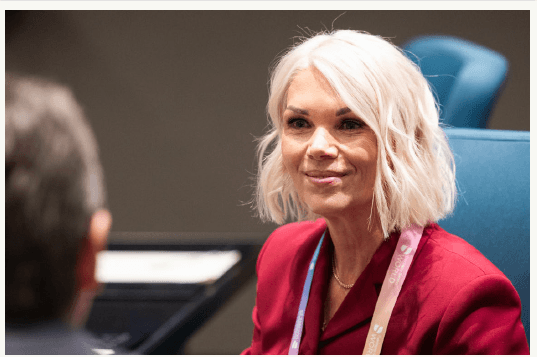
Six years ago, when Dr. Melonie MacDonald first adopted digital scanning, she viewed it primarily as a restorative tool—something to use once treatment had already been planned. Today, she sees it very differently.
On the main stage at DS World in September, Dr. MacDonald challenged dentists to start scanning every patient, including those who are not currently scheduled for treatment. The scan, she explained, can give patients a view of their oral health that they simply cannot get from words, radiographs, or even a traditional intraoral photograph.
But the value goes beyond patient education. As Dr. MacDonald has incorporated connected digital technology into her practice in Alberta, Canada, she has seen its impact on her team as well. When team members become more confident with scanning and other digital workflows, they can engage patients more effectively and take a more active role in their care.
That idea of confidence was central to her presentation. Dr. MacDonald explained that efficiency creates consistency, and consistency creates confidence. And when the team becomes more confident, she said, patients become more confident, too. When technology works together instead of forcing a team to navigate disconnected systems, it becomes easier to use—and easier to use consistently.
After her presentation, Dr. MacDonald spoke with DPS about how digital technology has changed patient communication, team engagement, and the way she thinks about building a connected practice.
You describe your practice as built around warmth, technology, and genuine patient connection. How have digital tools strengthened the dentist-patient relationship?
Dentistry is a very unique part of healthcare because patients don't often see what's going on in their mouths. Generally, most things don't have many symptoms. They don't see what we see.
When you can take a scan and show people the whole picture, that's when they get it. And when you let them see it first, without saying a word, and they see what you see, they get it. Then you don't have to describe as much. When they discover it, they trust it because they've discovered it too.
You talked on stage about the benefits of scanning every patient. Do you find that this is still uncommon among practices that own scanners?
Surprisingly, yes. And it's surprising because you have this technology—utilize it.
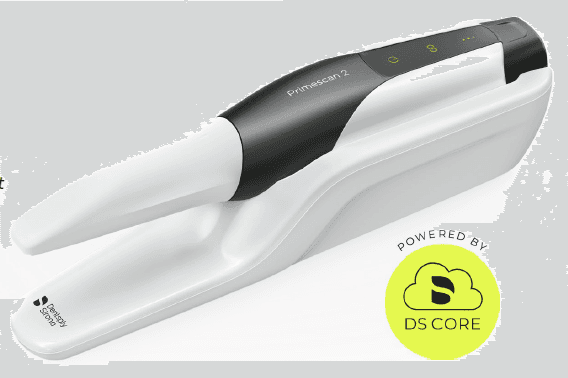
Before Primescan 2, I could see a bit of the argument because you could only really work on one patient at a time and entering patient data was a bit clunky. But now with Primescan 2 and DS Core, because all of my technology is connected, if that patient has had an x-ray, you can just pull up their chart in DS Core and scan directly there. So it's seamless.
The other pushback I hear often from doctors is, "My team won't be on board." My original six employees came from a very analog practice like I did. They had no experience scanning. But if you empower them and let them run with it, they have so much job satisfaction.
What do you think is the greatest value of having your digital technologies connected?
You hit the nail on the head—it's the connectivity. When every piece of your equipment talks to each other and you're not having to patch things together, download, upload, go back and forth, that makes the whole workflow so much more efficient.
And when things are efficient, you will use them. If things aren't efficient, it doesn't matter how powerful they are; they're not going to get used regularly.
You can have different scanners, a different CBCT, and a different mill, and none of it is communicating properly. It's clunky, and no one wants to use that. Connectivity is really the key to all of it.
How should dentists determine which technology genuinely deserves a place in their practice?
I think you really need to look at what you do. Every dentist has a subset of dentistry that they truly enjoy.
But I think every practice these days should have a digital scanner. That's the first piece that needs to happen. People want to see what's going on in their mouth. They've never been able to see that like we can. And I think routine scanning is now the standard of care, and patients are going to want that knowledge piece now more than ever.
If a dentist feels overwhelmed by digital dentistry, where should they begin, and how can they build toward a connected workflow over time?
I think this is what Dentsply Sirona does very well—partnering with education academies like CDOCS. If you feel overwhelmed, they take bite-sized pieces and make it make sense. I do think the DS reps themselves are incredible, and specialists from Patterson and Henry Schein are local and always amazing as well. Having that kind of support is key.
There will be a bit of a learning curve, but having people in your corner is huge, so you're not just relying on videos and Facebook. If you're overwhelmed, it's probably because you bought a piece of equipment that you have to watch a hundred YouTube videos to figure out how it works. And that's frustrating.
I bought a CBCT early on. I love endo, so that's why I purchased it. I purchased an Axios that probably had more capabilities than what I actually needed, but with every piece of equipment, I wanted to future-proof. I thought, "Maybe one day I'll have an associate who wants to place implants." I don't like surgery, but maybe this will happen one day. And it has. I have an associate that places implants, so all of my equipment talks to each other.
So I think in your mind, try to think ahead of the game. Even though you're not doing it now, you might be doing it later. These are big investments—you don't want to have to return a piece of equipment to upgrade it or swap it out.
