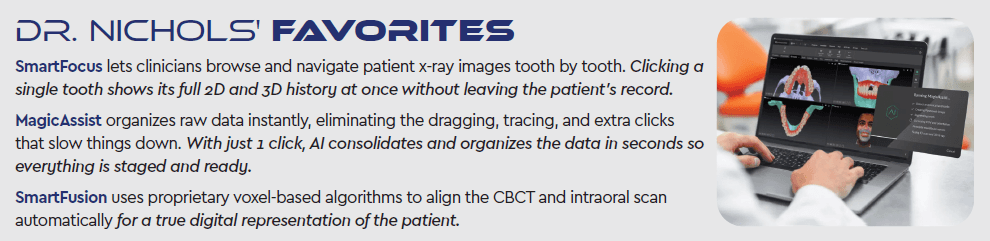



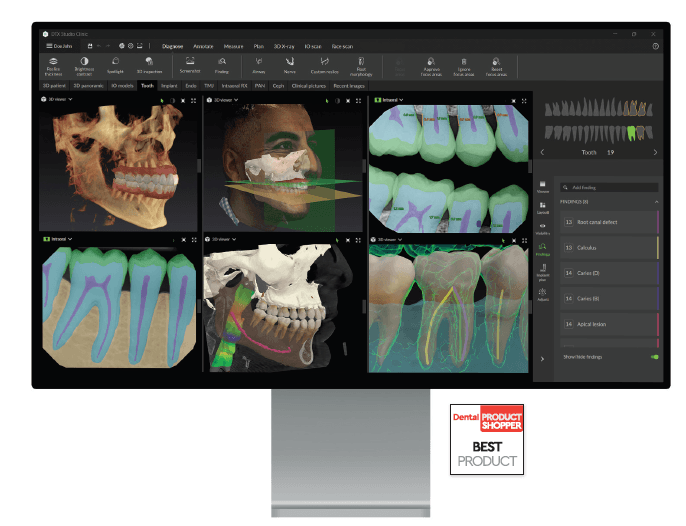
From the full dentofacial picture to a single root—without switching screens—DTX Studio Clinic brings the global and the granular into a single view for diagnostics, treatment planning, and patient connection
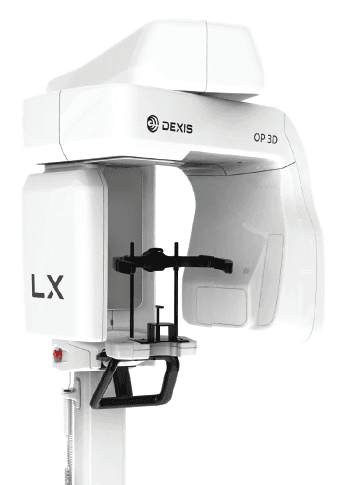
More Information, Less Friction
For Dr. Nichols, the value of technology goes beyond bells and whistles.
"We don't want technology that gives us more work; we want technology that gives us more information with less friction," he said. "And that's really where DTX Studio Clinic has become the most valuable for us."
Much of that friction clears before he reaches the operatory. The team runs setup end to end—positioning the patient, capturing the x-rays, running the scout, and exporting the images—then leaves the 3D volumes open and waiting.
Much of the 3D anatomy is already traced through AI, so the team simply confirms findings with a few clicks before the doctor even sits down.
Earning the Patient's Trust
Patients often can't see what Dr. Nichols sees—whether it’s an impacted tooth, a constricted airway, or a planned growth change—and asking them to accept treatment on faith invites the same skepticism people bring to any expert.
"It's kind of like going to the mechanic. If you go and bring your car in and something's making a noise, you have to just trust the mechanic,” he explained, “and sometimes, you don't."
With DTX Studio Clinic, Dr. Nichols can present all image types side by side in a visual gallery, giving patients a clear view of their oral health from every vantage point. Clicking on any tooth reveals its entire 2D and 3D history, allowing him to show change rather than describe it. This evidence, he said, turns a complicated orthodontic explanation into something patients can see and trust.
"We can put the original records next to where we are now and say, 'This is what we were concerned about before, this is what's changed through our treatment, and this is what we're going to do next.'"
The History Tells the Story
Dentistry, and orthodontics in particular, requires more than a snapshot. A course of treatment often spans 18 to 24 months—sometimes years of growth—so what matters most isn't any single image but how they accumulate.
"In ortho, one image tells you where you are, but the imaging history tells us where we're going," Dr. Nichols said, "and that, for us, is really important."