


Where Higher Strength Meets a Flexible Flow

Author
By: Dental Product Shopper
2/17/2026

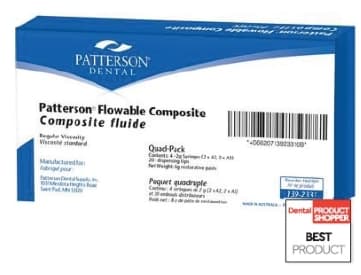
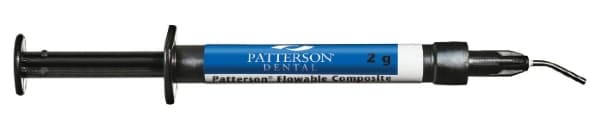
Available in 2 viscosities for maximum versatility, Patterson Flowable Composite is better than ever with higher flexural and compressive strength and improved radiopacity
 

patflowjf00.jpg

While flowable composites are known for their versatility—often providing a minimally invasive solution for a wide assortment of restorative scenarios—the Patterson Flowable Composite takes versatility to the next level with 2 viscosities for case-by-case flexibility. Patterson Dental recently combined that flexibility with an improved formula, which offers higher flexural and compressive strength and improved radiopacity, elevating the composite to its best performance ever.


Versatility in Every Flow


A longtime supporter of Patterson brand products, Dr. Jeffrey Greene shares why Patterson Flowable Composite has become the go-to flowable in his Fountain Hills, AZ, practice.


"The Patterson Flowable Composite handles very well, does not produce bubbles, and finishes to a nice shine,” Dr. Greene said. "It's a versatile material that’s useful for all classes of fillings, as a base/liner, or in combination with packable composite.”


“For some indications, especially with small fillings or small Class Vs, a flowable composite simply works best,” Dr. Greene continued, and that’s precisely when he turns to Patterson. He finds the Patterson Flowable Composite especially beneficial when used with a packable composite in the layering technique. “In those cases, the flowable sticks better to the tooth, and then I can build the remaining filling with packable composite,” he said.

patflowjf01.jpg

"Patterson Flowable Composite is a consistently excellent product that is very cost-effective,” agreed Dr. Marisol King, who relies on the material daily in her Rio Rancho, NM, practice.


She appreciates the material's “excellent viscosity and stable shade options” and uses it in a wide array of indications, such as when conservatively restoring an endo access, touching up temporary restorations, mocking up a smile try-in, cementing fixed ortho retainers, and restoring preventive resin restorations.


Case-by-Case Flexibility


For expanded treatment options, Patterson Flowable Composite is offered in low and regular viscosities. When deciding which viscosity to use, Dr. Greene said it depends on the situation—the low viscosity is a better option for filling deep Class II margins, while the high viscosity is ideal when a more thixotropic flow is desired.


 The Case for Low Viscosity...


“For a large Class II preparation on a lower molar, the low viscosity fills the box of the prep to the level of the pulpal floor. Then, the rest of the filling is completed with packable composite,” Dr. Greene explained.


Dr. King noted, "The low viscosity formula holds position and shape better, and I feel I have less chance for voids."

patflowjf02.jpg

...and the Case for Regular


When a case requires a thixotropic flowable material with more control over application, the regular viscosity is a viable option. For Dr. Greene, “the choice to use the regular viscosity is based on location of the box prep, upper vs lower, and the head position of the patient.” He explained, “In a deep Class II on an upper molar, gravity will puddle the low viscosity and not properly fill the box or seal the band. In those cases, a regular viscosity works best.”


With both the low and regular viscosities of Patterson Flowable Composite at her fingertips, Dr. King said she “generally uses the regular viscosity for touching up temporary restorations.”


Stronger by Design


“Wear resistance is paramount to any direct restorative material,” shared Dr. King, who appreciates the improved flexural and compressive strength of Patterson Flowable Composite.


“The size, location, and occlusal stresses on the fillings dictate the need for higher flexural and compressive strength to ensure a long-term successful restoration,” agreed Dr. Greene.


Patterson also improved the flowable material's radiopacity, which helps Dr. King easily visualize the material on radiographs—preventing misdiagnosis and unnecessary restorations from being completed.


"It's difficult to measure and evaluate radiopacity clinically, and it's too easy to miss a failing composite if there is not enough contrast on the x-ray," Dr. Greene said. "The Patterson flowable's higher radiopacity helps diagnose leakage, decay, voids, or open margins."


You Can’t Go Wrong with Patterson


Patterson's commitment to quality products is obvious to Dr. King. “I have been very pleased with Patterson’s wide range of restorative materials,” she affirmed. “I think for the price point and predictability, you can’t go wrong.”