


Where Strong Bonds Meet Seamless Shade Matching

Author
By: Dental Product Shopper
4/7/2026

Delivering the peace of mind that comes from a self-curing bonding agent and the shade-matching simplicity offered by a single-shade restorative, Tokuyama Universal Bond and OMNICHROMA composites are essential for long-lasting and esthetic restorations

 

tokuyma26spot00.jpg

If you ask Kevin M. Brown, DDS, AAACD, why he’s relied on Tokuyama Universal Bond and the OMNICHROMA family of restoratives since they were first introduced, he will tell you it’s an easy answer. So easy that he can quickly offer a list of 1-word reasons that cover the full range of benefits—from versatile and simple to efficient and forgiving.


A firm believer in minimally invasive dentistry, and the owner of the aptly named Minimally Invasive Dental Aesthetics in Bellevue, WA, Dr. Brown believes Tokuyama's adhesive and composites are—pardon the pun—a perfect "match" for his practice's core treatment philosophy.


Versatility Meets Strength


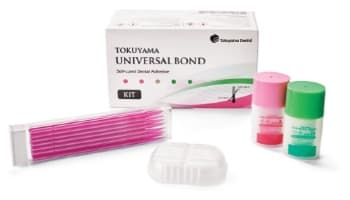
First up in Dr. Brown’s armamentarium is Tokuyama Universal Bond, a 2-component universal adhesive that offers high bond strength to indirect restorative materials such as porcelain, zirconia, alumina, precious and nonprecious metals, as well as resin materials, including inorganic filler.


“When we think about bonding resins, all clinicians really want is a material that’s going to bond well and make the restoration last,” Dr. Brown shared. “If a patient has a chipped porcelain restoration on a front tooth and they don’t want to replace it yet, Tokuyama Universal Bond can be used with a composite to repair the tooth, and I can anticipate that I’ll have a very strong adhesion to the porcelain and a restoration that will stay for quite a while before we need to replace it.”

tokuyma26spot01.jpg

A Self-Curing Bonding Agent


Tokuyama Universal Bond does not require surface agitation, light-curing, or wait time after placement, has virtually no postop sensitivity, and can be used in all etching modes. Additionally, the bonding agent is designed to be fully compatible with light-, self-, and dual-cured materials.


“I find the fact that it is not light-cured to be a big advantage,” Dr. Brown shared, “because with a light-cured bonding agent, you always have to hope that it’s going to cure. But I tend to question if the bonding resin deep in the restoration has cured completely. Tokuyama Universal Bond works well in deeper areas, such as deep Class II or III fillings. It offers me peace of mind for curing.”


Along with worry-free polymerization, Tokuyama Universal Bond works by mixing 1 drop of Bond A and Bond B together to trigger Active-Chemistry self-curing.


“I get a more effective result using a 2-bottle system,” Dr. Brown explained. “Since they are kept separate, they tend to store better, as opposed to 1-bottle systems, which can harden. When I'm ready to use it, I just mix the 2 bottles and the material sets up like it’s supposed to.”

tokuyma26spot02.jpg

Esthetics & Simplicity


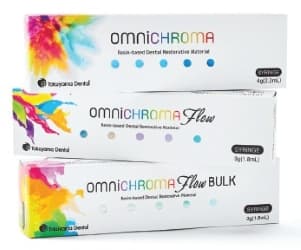
Another practice staple in Dr. Brown’s armamentarium is the OMNICHROMA family of 1-shade universal restoratives: OMNICHROMA, OMNICHROMA Flow, and OMNICHROMA Flow BULK. Featuring Smart Chromatic Technology to match every tooth from A1 to D4 with a single shade, these materials simplify color matching—even before and after bleaching.


With high polishability, wear resistance, and compressive strength, along with exceptional handling, OMNICHROMA reduces inventory while creating highly esthetic restorations.


“In the beginning, I had a lot of systems that I would use to try and get the combination I was looking for. I’d have 1 system for a patient’s dentin shade and another for the translucent shade,” Dr. Brown said. “And I found I needed to keep up on my stock of materials, and they usually expired before I got through the supply. Plus, there was the issue of long-term color maintenance. Unlike OMNICHROMA, other material shades stayed static over time and failed to blend as the surrounding tooth structure changed.


“OMNICHROMA can be used by dentists who may not be comfortable with the more complex layering techniques of traditional composites,” Dr. Brown added. “You get similar results with OMNICHROMA when used appropriately, it simplifies your workflow, and it can mimic the best of the best.”

Shop Now